
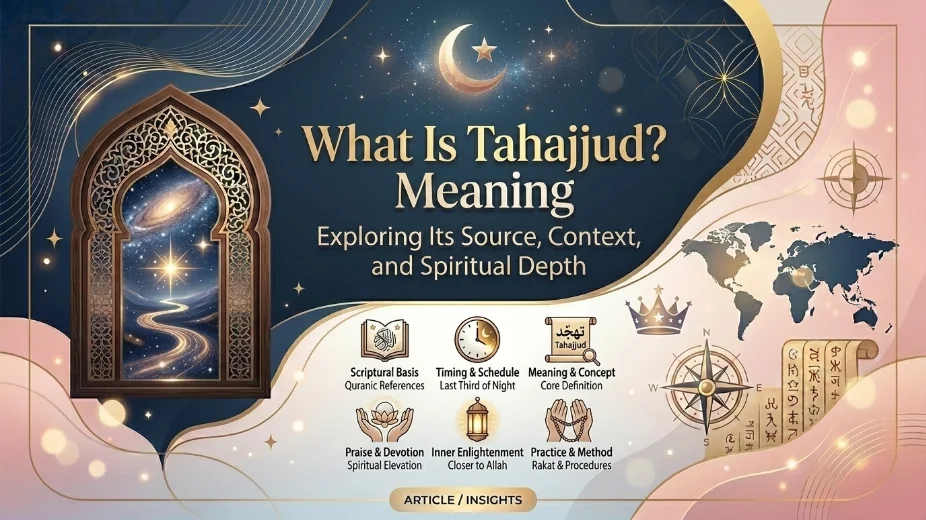
Tahajjud is a word many people search online when they hear it in a religious talk, see it in a prayer timetable, or come across it on social media posts about spirituality. At first, it may seem like a complex Arabic term, but its meaning is actually deeply beautiful and simple once explained clearly. Many beginners also search “tahajjud meaning” because they want to understand what this special night prayer is, why Muslims wake up for it, and how it is performed. In today’s digital world, people often encounter religious words online without context, so understanding them helps avoid confusion and builds stronger cultural and spiritual awareness. This article will break down the true meaning of Tahajjud in a very simple, friendly way so even beginners, teens, and non-native English speakers can fully understand it without difficulty.
What Does Tahajjud Mean? (Simple Definition)
The word Tahajjud (تَهَجُّد) comes from Arabic and refers to a special voluntary prayer performed by Muslims during the night after waking up from sleep.
Simple Meaning:
Tahajjud means:
- Waking up at night
- Leaving sleep for worship
- Praying to Allah in the quiet of the night
It is not an obligation like the five daily prayers, but it is highly recommended and spiritually rewarding.
In Easy Words:
Tahajjud is the night prayer that a Muslim performs after sleeping for a while and then waking up to pray again.
This makes it different from other prayers because it requires effort, calmness, and dedication during the quietest part of the night.
Tahajjud Meaning in Islam (Deeper Understanding)
In Islamic teachings, Tahajjud is known as one of the most peaceful and powerful forms of worship. It is a time when a believer connects directly with Allah in silence, away from distractions.
Why It Is Special:
- It is performed when most people are asleep
- The world is quiet and peaceful
- It allows deep focus in prayer
- It is a time for personal reflection and dua (supplication)
Muslims believe that prayers made during Tahajjud are more heartfelt because the heart is calm and sincere at night.
Origin and Importance of the Word Tahajjud
The word Tahajjud comes from the Arabic root related to “leaving sleep” or “struggling against sleep.”
Linguistic Origin:
- Arabic root: H-J-D (هجد)
- Meaning: to stay awake at night or to give up sleep
Islamic Importance:
Tahajjud is mentioned in Islamic teachings as a voluntary night prayer practiced by the Prophet Muhammad (peace be upon him), who regularly prayed at night and encouraged others to do the same.
How Tahajjud Is Performed (Step-by-Step Explanation)
Tahajjud prayer is simple but requires intention and effort.
Basic Steps:
- Sleep after Isha prayer
- Wake up in the last third of the night
- Perform ablution (wudu)
- Pray 2 or more rak’ahs (units of prayer)
- Make personal dua (supplication)
Key Point:
There is no fixed number of rak’ahs. A person can pray as little as 2 or as many as they feel comfortable with.
Why People Pray Tahajjud
People wake up for Tahajjud for different spiritual and personal reasons.
Common Reasons:
- Seeking forgiveness from Allah
- Asking for guidance in life decisions
- Finding peace of mind
- Strengthening faith
- Making heartfelt personal prayers
Many Muslims believe Tahajjud is a time when prayers are more likely to be accepted because it is performed with sincerity and quiet devotion.
Benefits of Tahajjud Prayer
Tahajjud is not just a ritual; it also has emotional and spiritual benefits.
Spiritual Benefits:
- Strengthens connection with Allah
- Increases patience and discipline
- Brings inner peace
- Helps reduce stress and anxiety
Personal Benefits:
- Improves self-control
- Encourages early waking habits
- Builds mental clarity
- Helps with emotional healing
Tahajjud in the Quran and Hadith
Tahajjud is highly respected in Islamic teachings.
Quran Reference (Meaning):
The Quran encourages night prayer as a way of getting closer to Allah and gaining spiritual strength.
Hadith Teaching:
Prophet Muhammad (peace be upon him) regularly performed night prayers and described it as a powerful time for worship and forgiveness.
Common Misunderstandings About Tahajjud
Many beginners misunderstand Tahajjud because of limited information online.
Wrong Ideas People Have:
- It is a compulsory prayer ❌
- It must be prayed at a fixed time ❌
- It requires long hours of worship ❌
- Only scholars can perform it ❌
Correct Understanding:
- It is voluntary (nafl) prayer
- It can be short or long
- Anyone can perform it
- It is flexible and personal
Tahajjud vs Other Prayers
To understand Tahajjud better, it helps to compare it with other Islamic prayers.
Daily Prayers (Salah):
- Obligatory
- Performed five times a day
- Fixed times
Tahajjud:
- Voluntary
- Performed at night after sleep
- Flexible timing and length
When Is the Best Time for Tahajjud?
The best time for Tahajjud is the last third of the night, just before Fajr prayer.
Why This Time Is Special:
- The world is silent
- Fewer distractions
- Greater focus in worship
- Spiritually peaceful environment
How Tahajjud Is Used in Real Life Conversations
Although Tahajjud is a religious term, people often talk about it in daily life, especially in spiritual discussions.
Example Conversations:
- “I started waking up for Tahajjud recently.”
- “Tahajjud gives me peace of mind.”
- “Try praying Tahajjud if you are feeling stressed.”
It is not used as slang; it is always used in a spiritual or religious context.
Tahajjud in Modern Digital Culture
With the rise of social media, Tahajjud is often shared in:
- Islamic reminder posts
- Motivational quotes
- Spiritual TikTok videos
- Instagram stories about self-improvement
Important Note:
Tahajjud is NOT internet slang and has no alternative meaning in texting culture. It remains a religious term only.
Common Confusion: Does Tahajjud Have a Slang Meaning?
Some people mistakenly think Tahajjud is slang or has a hidden online meaning, but this is incorrect.
Clear Answer:
- Tahajjud = Islamic night prayer
- No slang meaning
- No abbreviations or short forms
- Not used in casual texting culture
If someone uses it online, they are referring to the prayer.
Similar Islamic Terms You Might Hear
To understand Tahajjud better, here are related terms:
1. Qiyam-ul-Layl
Night worship in general, including prayer and remembrance.
2. Fajr Prayer
The obligatory morning prayer performed before sunrise.
3. Dua
Personal prayer or supplication.
4. Nafl Prayer
Voluntary prayers in Islam.
How to Start Praying Tahajjud (Beginner Tips)
If you are new, you can start small.
Simple Tips:
- Start with 2 rak’ahs only
- Sleep early after Isha
- Set an alarm for the night
- Keep your intention sincere
- Don’t overthink—just start
Consistency is more important than quantity.
How to Make Dua During Tahajjud
Tahajjud is a powerful time for personal prayers.
What You Can Ask For:
- Forgiveness
- Health
- Peace of mind
- Success in life
- Guidance for decisions
Speak from your heart in your own words.
Is Tahajjud Still Practiced Today?
Yes, Tahajjud is still widely practiced around the world.
Modern Trend:
- Many Muslims share their Tahajjud journey online
- It is often promoted as a mental wellness practice
- Younger generations are becoming more interested in it
It remains a strong part of Islamic spiritual life today.
Tahajjud in Gen-Z Spiritual Culture
Among young Muslims, Tahajjud is often seen as:
- A form of self-discipline
- A mental reset routine
- A peaceful break from stress
- A private spiritual habit
It is not a trend in the entertainment sense, but it is becoming more discussed in wellness and faith-based communities.
FAQs
1. What is the simple meaning of Tahajjud?
Tahajjud is a voluntary night prayer performed after sleeping and waking up for worship.
2. Is Tahajjud compulsory in Islam?
No, it is a voluntary (nafl) prayer, not obligatory.
3. How many rak’ahs are in Tahajjud?
There is no fixed number, but usually 2 or more rak’ahs are prayed.
4. What time is best for Tahajjud?
The best time is the last third of the night before Fajr.
5. Can anyone pray Tahajjud?
Yes, any Muslim can pray Tahajjud regardless of age or level of knowledge.
6. Does Tahajjud have a slang meaning online?
No, Tahajjud only refers to the Islamic night prayer.
Conclusion
Tahajjud is a deeply meaningful Islamic night prayer that involves waking up from sleep to worship Allah during the quiet hours of the night. It is not a slang term or casual expression, but a powerful spiritual practice rooted in Islamic tradition. Understanding the tahajjud meaning helps clear confusion and allows people to appreciate its emotional and spiritual depth. Whether you are learning about it for the first time or trying to start practicing it, Tahajjud is about sincerity, peace, and connection with Allah. Even small efforts, like praying two rak’ahs, can bring a sense of calm and spiritual strength into daily life. Anyone can begin, and consistency matters more than perfection
